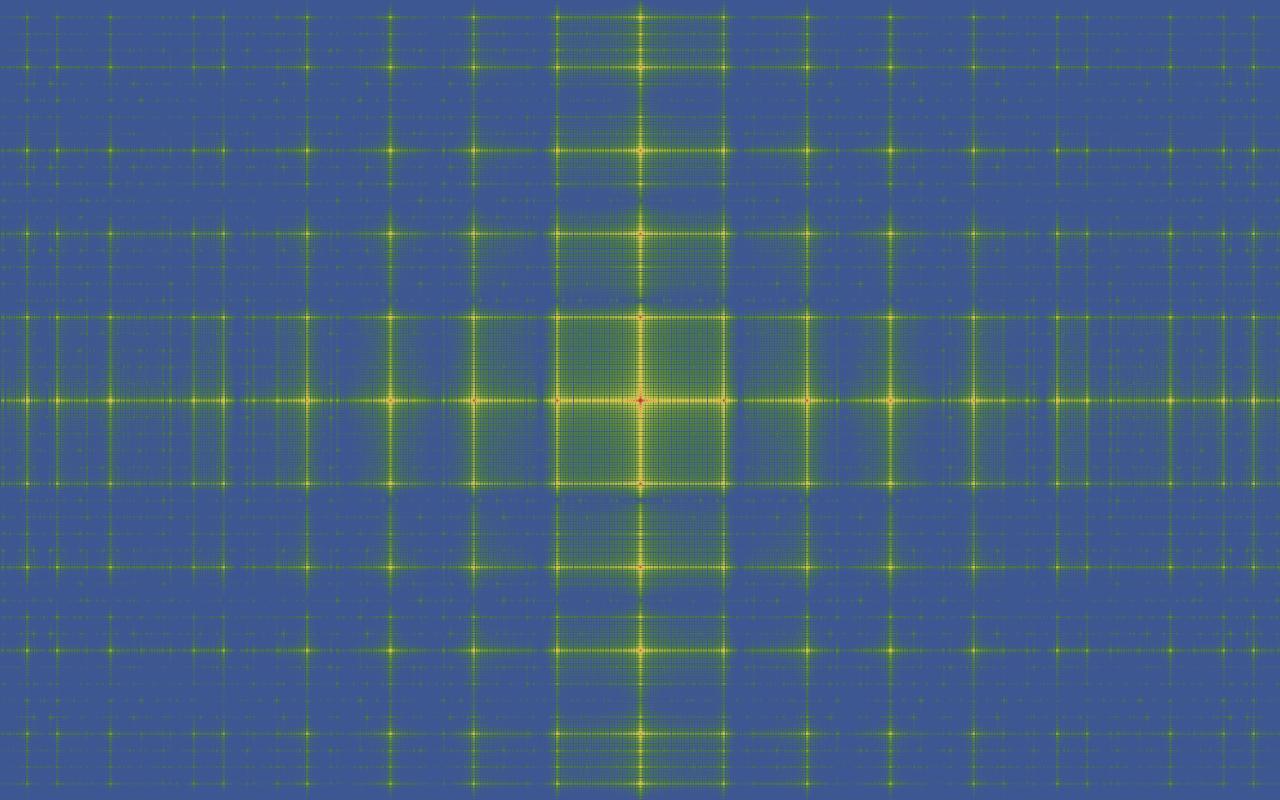
Fraunhofer diffraction
This post explores the basic computational analysis of Fraunhofer diffraction patterns using 2D fourier tranformation
Fraunhofer Diffraction is a specific case of wave interference. In general, diffraction is a deviation of waves from straight-line propagation without any change in their energy due to an obstacle or through an aperture. Following the approach described in Wikipedia's page
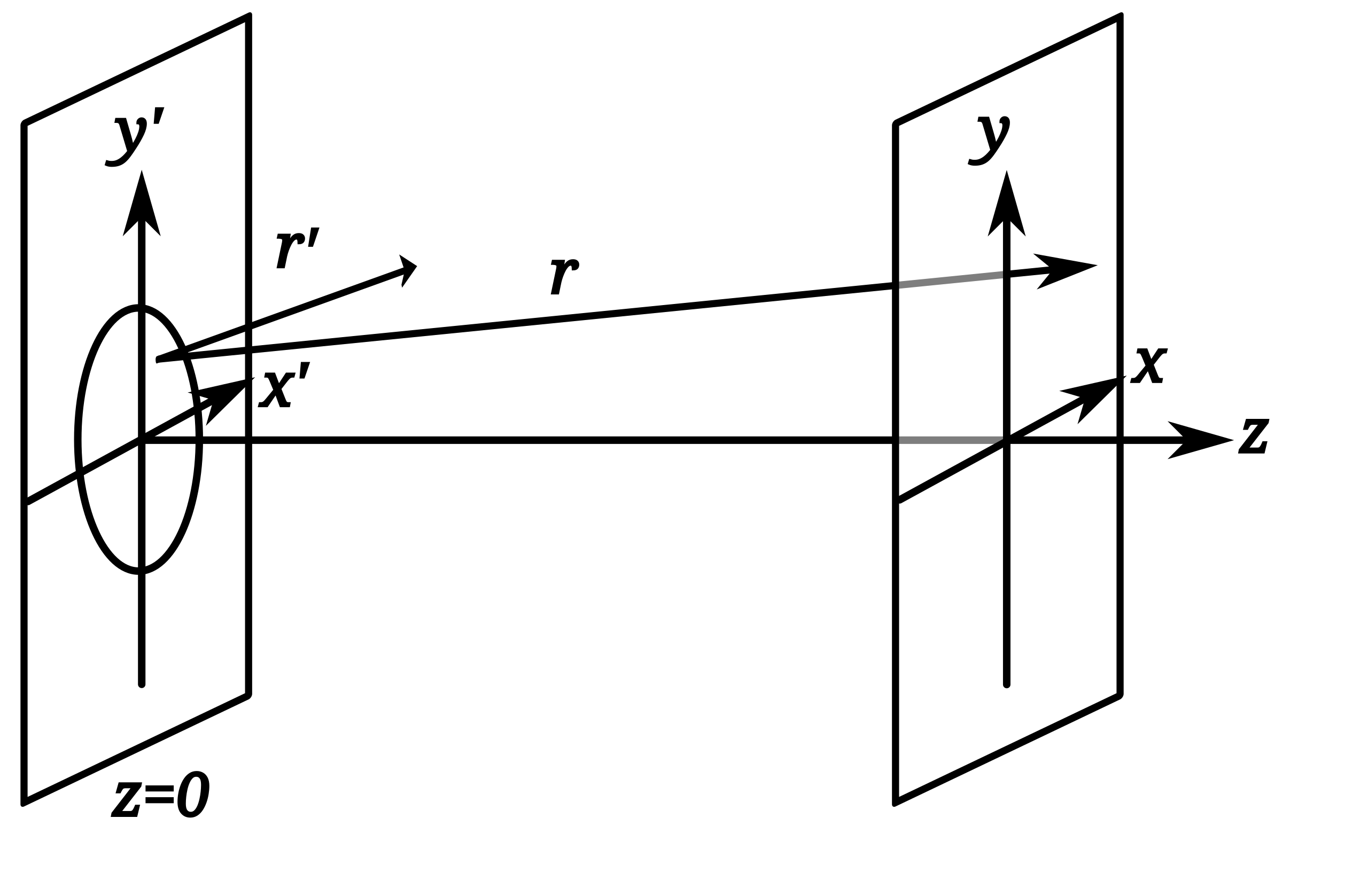
The Fraunhofer diffraction equation is an approximation which can be applied when the diffracted wave is observed in the far field, and also when a lens is used to focus the diffracted light; in many instances, a simple analytical solution is available to the Fraunhofer equation
where is the complex amplitude of the light on the aperture (our blocking object shape or source shape) and is the amplitude of observed light at the given distance—the actual diffraction pattern. One can see that this is effectively a 2D Fourier transformation of the shape causing the diffraction.
This can easily be written in Wolfram. Here amplitude2D returns the logarithm of the amplitude of the Fourier transformed data, which enhances the visibility of features in the frequency domain:
amplidute2D[data_] := Module[{d, fw, nRow, nCol},
  {nRow, nCol} = Dimensions[data];
  d = data;
  d = d*(-1)^Table[i + j, {i, nRow}, {j, nCol}];
  fw = Fourier[d, FourierParameters -> {1, 1}];

  Log[1 + Abs@fw]
]
We are not interested in phase information, assuming that our source is monochromatic and we look at the resulting intensity of interference patterns on the screen; therefore, Abs is applied.
Common patterns
Let's test the most common diffraction patterns. The first one is when the light is passed though a thin slit:
With[{aperture = RegionImage[Rectangle[{-0.15,-0.99}, {0.05,0.99}], {{-1,1}, {-1,1}}, RasterSize->150]},
  {
    Labeled[aperture, "Aperture"],
    Labeled[amplidute2D[ImageData[aperture]]//Rescale//Image//Colorize, "Screen"]
  } // Row
]
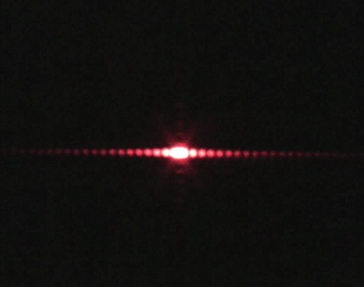
(*GB[*){{(*GB[*){{(*BB[*)((*VB[*)(FrontEndRef["b5776670-7ffd-4bd6-85ac-73c414c9a4c3"])(*,*)(*"1:eJxTTMoPSmNkYGAoZgESHvk5KRCeEJBwK8rPK3HNS3GtSE0uLUlMykkNVgEKJ5mam5uZmRvomqelpeiaJKWY6VqYJibrmhsnmxiaJFsmmiQbAwCDKxWw"*)(*]VB*))(*,*)(*"1:eJxTTMoPSmNkYGAoZgESHvk5KWnMIB4vkAjLTC13SU3OL0osyS8KBskHJOalpjHBVAeV5qQWcwIZjjmZ6Xm5qXklCDmfzOKSYjYgwxkonFpUzAFkOiUWp+ZkYpgggCQVkF+cWZKZn4eiHgAIiyhB"*)(*]BB*)(*VB[*)(**)(*,*)(*"1:eJxTTMoPSmNiYGAo5gUSYZmp5S6pyflFiSX5RcEsQBHPktRciDyIF1Sak1osAGS4pKYlluaUOCUWpwaXVOakBrMDBX0Sk1JzUlMAU+0Vnw=="*)(*]VB*)}(*||*),(*||*){"Aperture"(*VB[*)(**)(*,*)(*"1:eJxTTMoPSmNiYGAo5gUSYZmp5S6pyflFiSX5RcEsQBHPktRciDyIF1Sak1osAGS4pKYlluaUOCUWpwaXVOakBvMABX0Sk1JzUlPAFADFtBeE"*)(*]VB*)}}(*]GB*)(*|*),(*|*)(*GB[*){{(*BB[*)((*VB[*)(FrontEndRef["e93aa877-409e-478e-85f5-4d44fc4aa619"])(*,*)(*"1:eJxTTMoPSmNkYGAoZgESHvk5KRCeEJBwK8rPK3HNS3GtSE0uLUlMykkNVgEKp1oaJyZamJvrmhhYpuqamFuk6lqYppnqmqSYmKQlmyQmmhlaAgCCCRWN"*)(*]VB*))(*,*)(*"1:eJxTTMoPSmNkYGAoZgESHvk5KWnMIB4vkAjLTC13SU3OL0osyS8KBskHJOalpjHBVAeV5qQWcwIZjjmZ6Xm5qXklCDmfzOKSYjYgwxkonFpUzAFkOiUWp+ZkYpgggCQVkF+cWZKZn4eiHgAIiyhB"*)(*]BB*)(*VB[*)(**)(*,*)(*"1:eJxTTMoPSmNiYGAo5gUSYZmp5S6pyflFiSX5RcEsQBHPktRciDyIF1Sak1osAGS4pKYlluaUOCUWpwaXVOakBrMDBX0Sk1JzUlMAU+0Vnw=="*)(*]VB*)}(*||*),(*||*){"Screen"(*VB[*)(**)(*,*)(*"1:eJxTTMoPSmNiYGAo5gUSYZmp5S6pyflFiSX5RcEsQBHPktRciDyIF1Sak1osAGS4pKYlluaUOCUWpwaXVOakBvMABX0Sk1JzUlPAFADFtBeE"*)(*]VB*)}}(*]GB*)}}(*]GB*) Does it look familiar? Here is a real experiment (MIT Physics Instructional Resources Lab) of a laser pointer beam passing through a thin slit:
Here is another example with a thin hole:
With[{aperture = RegionImage[Disk[{0,0},0.1], {{-1,1}, {-1,1}}, RasterSize->150]},
  {
    Labeled[aperture, "Aperture"],
    Labeled[amplidute2D[ImageData[aperture]]//Rescale//Image//Colorize, "Screen"]
  } // Row
]
(*GB[*){{(*GB[*){{(*BB[*)((*VB[*)(FrontEndRef["ded46b3f-0987-46af-a8c8-20ae45465a41"])(*,*)(*"1:eJxTTMoPSmNkYGAoZgESHvk5KRCeEJBwK8rPK3HNS3GtSE0uLUlMykkNVgEKp6SmmJglGafpGlhamOuamCWm6SZaJFvoGhkkppqYmpiZJpoYAgCMqRWo"*)(*]VB*))(*,*)(*"1:eJxTTMoPSmNkYGAoZgESHvk5KWnMIB4vkAjLTC13SU3OL0osyS8KBskHJOalpjHBVAeV5qQWcwIZjjmZ6Xm5qXklCDmfzOKSYjYgwxkonFpUzAFkOiUWp+ZkYpgggCQVkF+cWZKZn4eiHgAIiyhB"*)(*]BB*)(*VB[*)(**)(*,*)(*"1:eJxTTMoPSmNiYGAo5gUSYZmp5S6pyflFiSX5RcEsQBHPktRciDyIF1Sak1osAGS4pKYlluaUOCUWpwaXVOakBrMDBX0Sk1JzUlMAU+0Vnw=="*)(*]VB*)}(*||*),(*||*){"Aperture"(*VB[*)(**)(*,*)(*"1:eJxTTMoPSmNiYGAo5gUSYZmp5S6pyflFiSX5RcEsQBHPktRciDyIF1Sak1osAGS4pKYlluaUOCUWpwaXVOakBvMABX0Sk1JzUlPAFADFtBeE"*)(*]VB*)}}(*]GB*)(*|*),(*|*)(*GB[*){{(*BB[*)((*VB[*)(FrontEndRef["5d054043-a33c-4cb9-8b71-e5e2de737d0a"])(*,*)(*"1:eJxTTMoPSmNkYGAoZgESHvk5KRCeEJBwK8rPK3HNS3GtSE0uLUlMykkNVgEKm6YYmJoYmBjrJhobJ+uaJCdZ6lokmRvqppqmGqWkmhubpxgkAgB8wRWa"*)(*]VB*))(*,*)(*"1:eJxTTMoPSmNkYGAoZgESHvk5KWnMIB4vkAjLTC13SU3OL0osyS8KBskHJOalpjHBVAeV5qQWcwIZjjmZ6Xm5qXklCDmfzOKSYjYgwxkonFpUzAFkOiUWp+ZkYpgggCQVkF+cWZKZn4eiHgAIiyhB"*)(*]BB*)(*VB[*)(**)(*,*)(*"1:eJxTTMoPSmNiYGAo5gUSYZmp5S6pyflFiSX5RcEsQBHPktRciDyIF1Sak1osAGS4pKYlluaUOCUWpwaXVOakBrMDBX0Sk1JzUlMAU+0Vnw=="*)(*]VB*)}(*||*),(*||*){"Screen"(*VB[*)(**)(*,*)(*"1:eJxTTMoPSmNiYGAo5gUSYZmp5S6pyflFiSX5RcEsQBHPktRciDyIF1Sak1osAGS4pKYlluaUOCUWpwaXVOakBvMABX0Sk1JzUlPAFADFtBeE"*)(*]VB*)}}(*]GB*)}}(*]GB*) And a real experiment of a red laser limited by a circular aperture (Wikipedia, By Wisky - Own work, CC BY-SA 3.0):
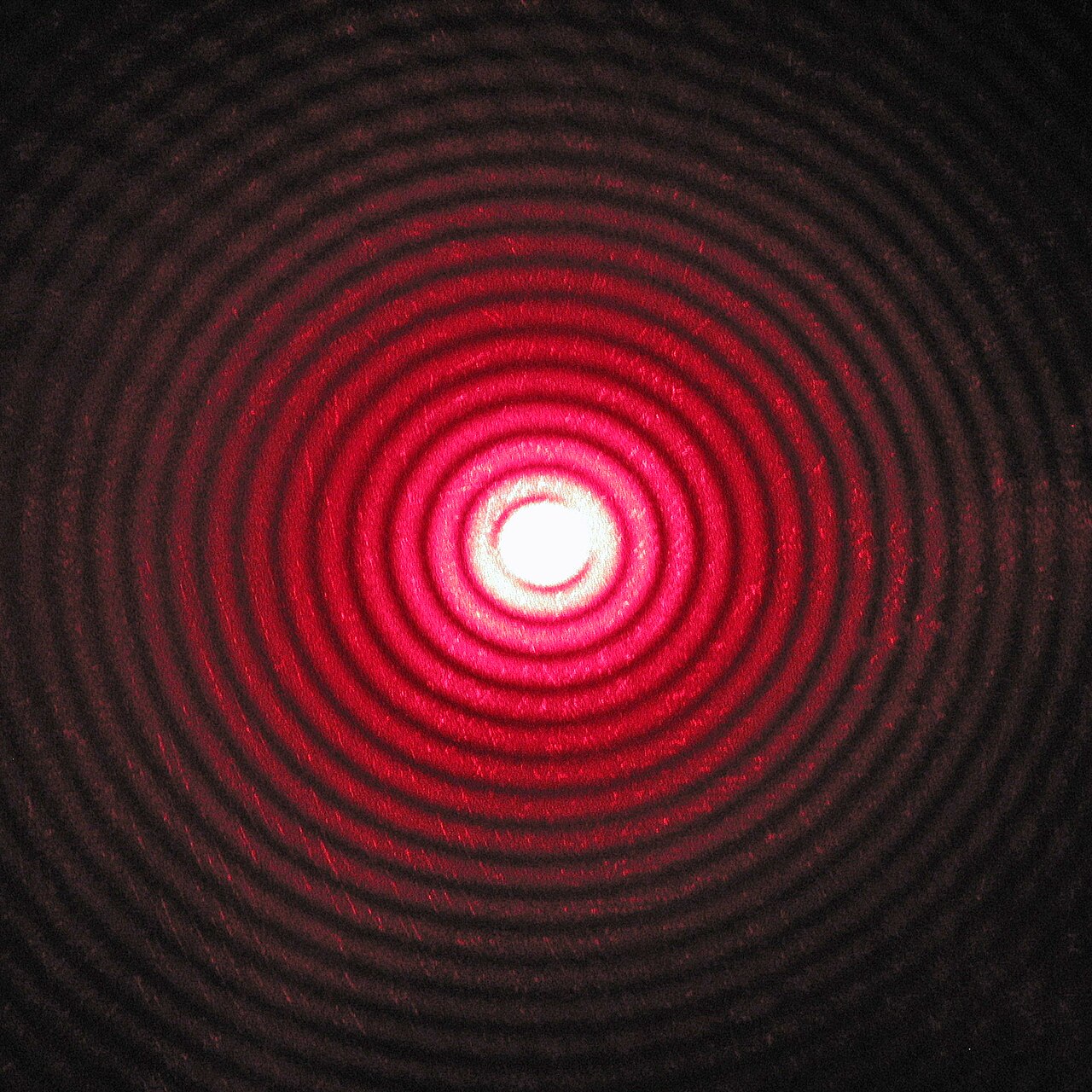
This is also known as an Airy disk.
Due to its Fourier nature, the smaller the hole, the larger the diffraction patterns. This is why this method is used in Laue diffraction to study crystal structures.
Interactive example
The module is designed to provide an interactive interface for visualizing diffraction patterns. It uses a canvas input element where you can freely draw any shape and see the result immediately
Module[{
  buffer = ImageData[ConstantImage[0, {300,300}], "Real32"],
  shape = InputRaster[ImageSize->{300,300}, "AllowUpdateWhileDrawing"->True]
},

  EventHandler[shape, Function[new,
    With[{array = ImageData[RemoveAlphaChannel[new, White] // Binarize // ColorNegate, "Real32"]},
      With[{amp = amplidute2D[array]},
        buffer = amp / Max[amp];
      ];
    ]
  ]];

  {
    shape,
    Image[buffer // Offload, "Real32", Magnification->2]
  } // Row
]
Here is a demonstration: